


Qatar once again demonstrated the resilience and tactical discipline that helped them become one of Asia's most successful national teams. Facing a technically gifted Swiss side at the 2026 FIFA World Cup, the Asian champions produced a determined defensive performance, frustrating wave after wave of attacks before securing a valuable 1-1 draw. While Switzerland controlled large portions of possession, Qatar's organization, compact shape, and commitment to defensive principles proved enough to earn a crucial result.
For readers searching for Qatar vs Switzerland tactical analysis, Qatar low block defensive system explained, how Qatar held Switzerland to a draw, and 2026 FIFA World Cup defensive tactics breakdown, this match offers a fascinating example of how disciplined defending can neutralize technically superior opposition.
The result also drew attention from supporters following tournament favorites such as Brazil Jerseys, Argentina Jerseys, France Jerseys, and England Jerseys, proving once again that World Cup football is often decided by tactical execution rather than reputation alone.
Why Was Qatar's Defensive Strategy So Effective?
Qatar entered the match understanding that Switzerland would likely dominate possession. Rather than attempting to match the Swiss in a technical battle, Qatar focused on maintaining a compact defensive structure and limiting space in dangerous areas.
The team's defensive block remained narrow and organized throughout the match. Midfielders stayed close to defenders, making it extremely difficult for Switzerland to find passing lanes through the center of the pitch.
This approach forced the Swiss attack into wider positions, where crosses and long-range efforts became their primary weapons.
What Is a Low Block and Why Did Qatar Use It?

A low block is a defensive system where a team positions most of its players behind the ball, protecting central areas and reducing space near the penalty box. Qatar executed this strategy with remarkable discipline.
Instead of pressing high, the Asian champions allowed Switzerland to possess the ball in non-threatening areas while focusing on denying access to dangerous zones. This patient approach minimized defensive risks and preserved the team's shape.
For football fans researching low block tactics in international football and how underdogs defend against possession teams, Qatar's performance serves as a textbook example.
How Did Qatar Prevent Switzerland From Dominating the Final Third?

The key to Qatar's success was their ability to compress space between the defensive and midfield lines. Swiss attackers often found themselves receiving the ball with little room to turn or create chances.
Whenever Switzerland attempted intricate passing combinations near the penalty area, multiple Qatari players immediately converged on the ball carrier. This collective defending disrupted rhythm and prevented sustained pressure in central zones.
Teams recognized for similar defensive organization include squads wearing Morocco Jerseys, Croatia Jerseys, Uruguay Jerseys, and Scotland Jerseys.
How Important Were Defensive Transitions?

One of the most impressive aspects of Qatar's performance was how quickly they reorganized after losing possession. Every player immediately recovered into defensive positions, preventing Switzerland from exploiting transition moments.
This commitment ensured that Switzerland rarely encountered numerical advantages in attacking situations. Even when possession changed hands unexpectedly, Qatar's structure remained intact.
Such discipline is essential in tournament football, where small mistakes often determine outcomes.
How Did Qatar Create Their Goal?
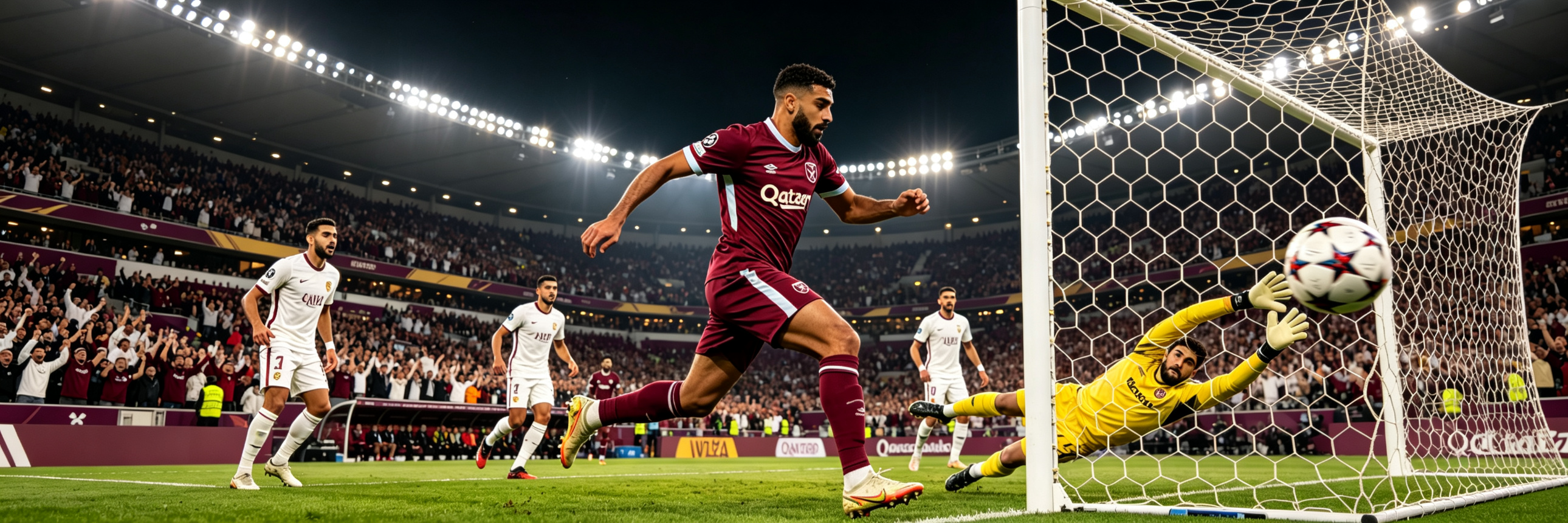
Despite spending significant periods defending, Qatar remained dangerous whenever opportunities arose. Their equalizing goal came from a rapid attacking sequence that demonstrated the importance of efficiency.
After regaining possession, Qatar transitioned forward quickly, moving the ball into advanced areas before Switzerland could fully recover defensively. A well-timed run and composed finish transformed one of Qatar's limited opportunities into a crucial goal.
This moment highlighted a fundamental principle of tournament football: teams do not need dozens of chances to influence a result if they remain clinical when opportunities appear.
Why Could Switzerland Not Find a Winning Goal?
Switzerland controlled possession and territory but struggled to convert that control into clear scoring opportunities. Qatar's compact shape consistently forced attacks away from dangerous central areas.
Crosses were often cleared effectively, while shots from distance rarely troubled the defense. As frustration increased, Switzerland became more predictable, making it easier for Qatar to anticipate attacking patterns.
The match illustrated the challenge of breaking down a well-organized defensive block, regardless of technical quality.
What Does This Result Mean for Qatar?

The draw represents more than a single point. It reinforces Qatar's reputation as one of Asia's most tactically disciplined national teams and demonstrates their ability to compete against established European opposition.
For supporters searching for Qatar World Cup tactical strengths, Asian champions defensive strategy, and Qatar knockout stage qualification chances, this performance provides significant encouragement.
The ability to remain organized under sustained pressure is often a key factor in successful World Cup campaigns.
What Tactical Lessons Can Other Teams Learn?
Qatar's performance offers valuable insights for teams facing stronger opposition. Defensive organization, collective discipline, and intelligent space management remain among the most effective tools in modern football.
While possession often dominates headlines, matches are frequently decided by positioning, concentration, and the ability to capitalize on limited opportunities.
Other ambitious nations such as Germany Jerseys, Spain Jerseys, Portugal Jerseys, and Netherlands Jerseys will undoubtedly continue studying how different tactical systems perform as the tournament progresses.
Key Tactical Takeaways from Qatar vs Switzerland
- A compact low block can effectively neutralize possession-heavy opponents.
- Defensive discipline is often more important than possession statistics.
- Quick defensive transitions help maintain structural integrity.
- Clinical finishing can maximize limited attacking opportunities.
- Patience and organization are essential in major international tournaments.
Related National Team Collections
- Qatar Jerseys
- Switzerland Jerseys
- Brazil Jerseys
- Argentina Jerseys
- France Jerseys
- England Jerseys
- Morocco Jerseys
- Germany Jerseys
- Spain Jerseys
- Portugal Jerseys
Conclusion: Qatar Proves the Value of Defensive Excellence
Qatar's 1-1 draw against Switzerland was a showcase of modern defensive football at its finest. Through disciplined positioning, compact defending, intelligent game management, and efficient attacking transitions, the Asian champions successfully frustrated a talented Swiss side and earned a valuable result. In a tournament often dominated by discussions of attacking stars and possession statistics, Qatar reminded the football world that defensive organization remains one of the most powerful weapons in the game. As the 2026 FIFA World Cup continues, this performance may serve as a blueprint for teams looking to compete with stronger opponents through tactical discipline and collective effort.